Punakha Dzong
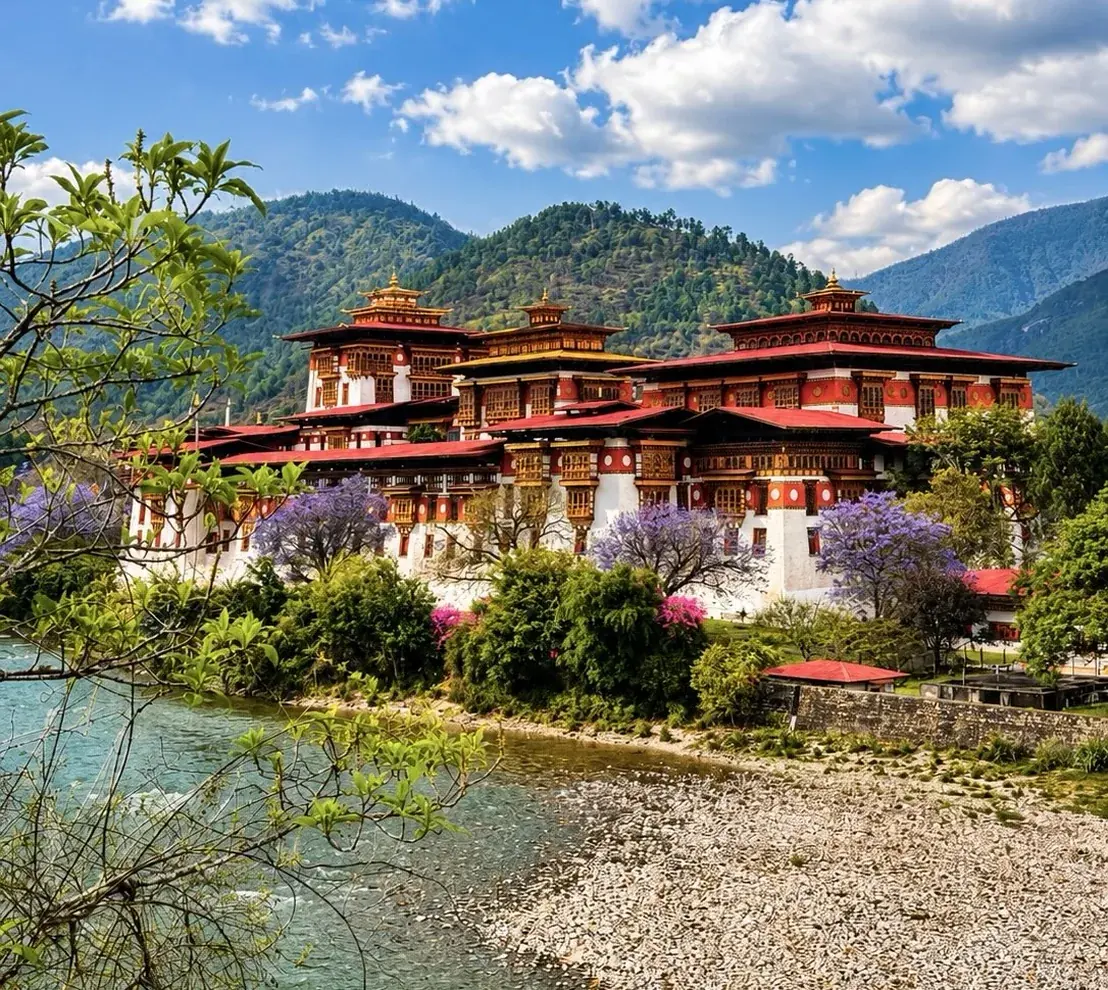
The second-oldest and, most people agree, the most beautiful dzong in Bhutan. Coronations and royal weddings happen here. Allow a proper hour — the inner courtyards and the assembly hall are the point, not the exterior photograph.

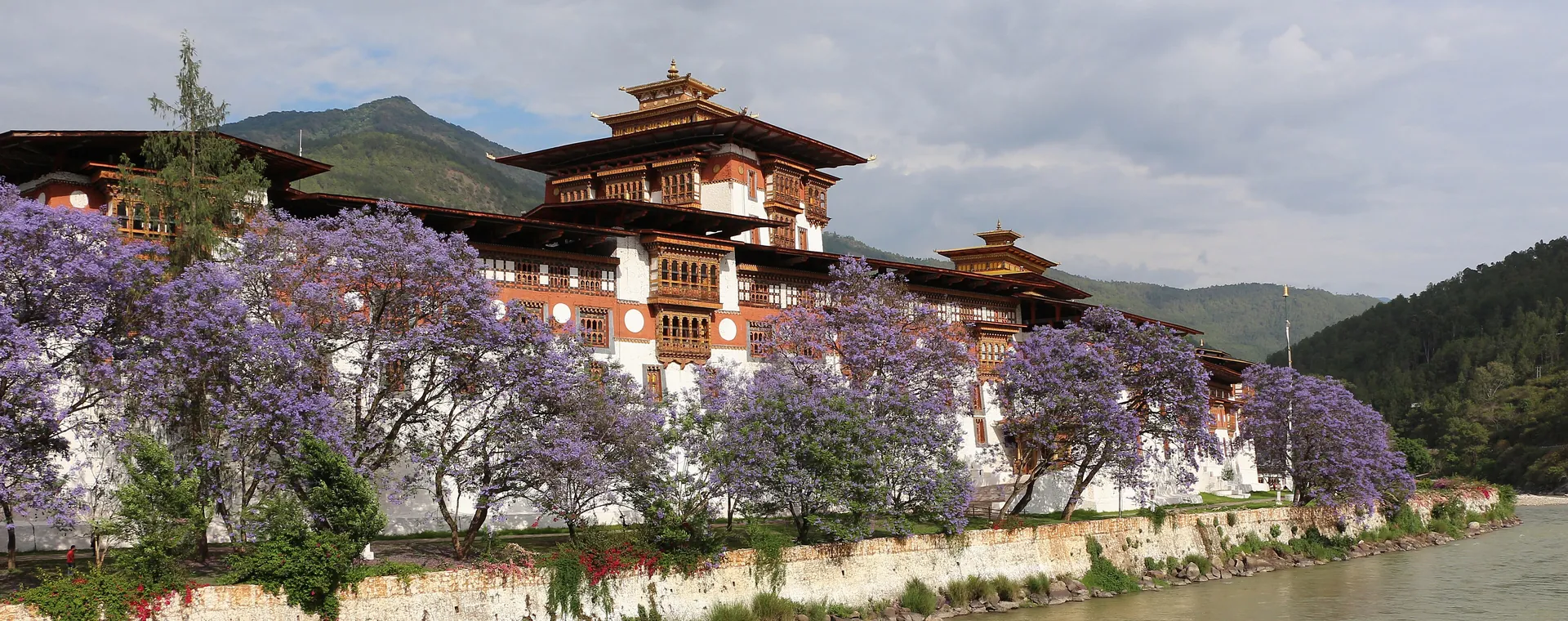
Punakha was Bhutan’s capital until 1955 and sits at 1,200 m, low enough to stay warm when Thimphu is freezing. Punakha Dzong, on the spit where the Pho Chhu and Mo Chhu meet, is the finest building in the country. One or two nights; 2 hr 30 min from Thimphu over Dochula Pass.
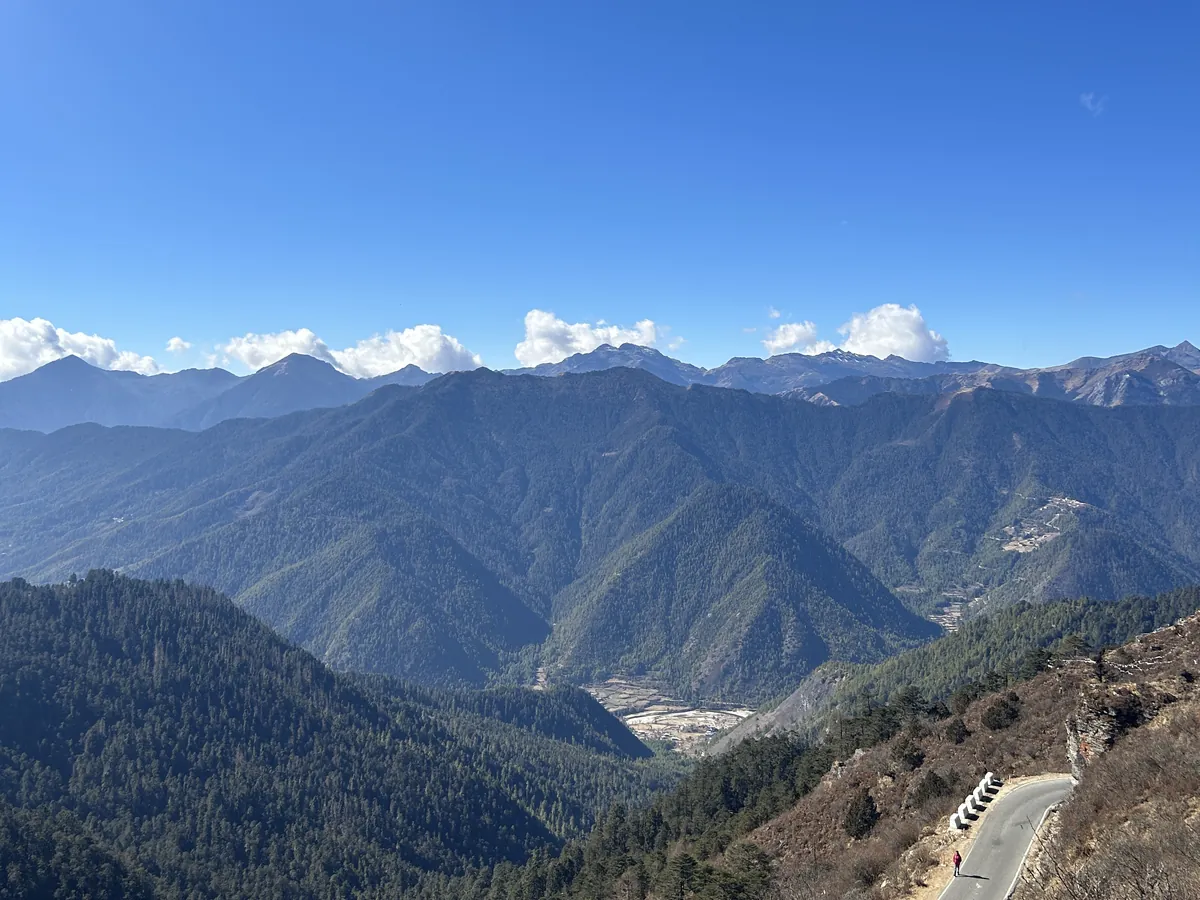
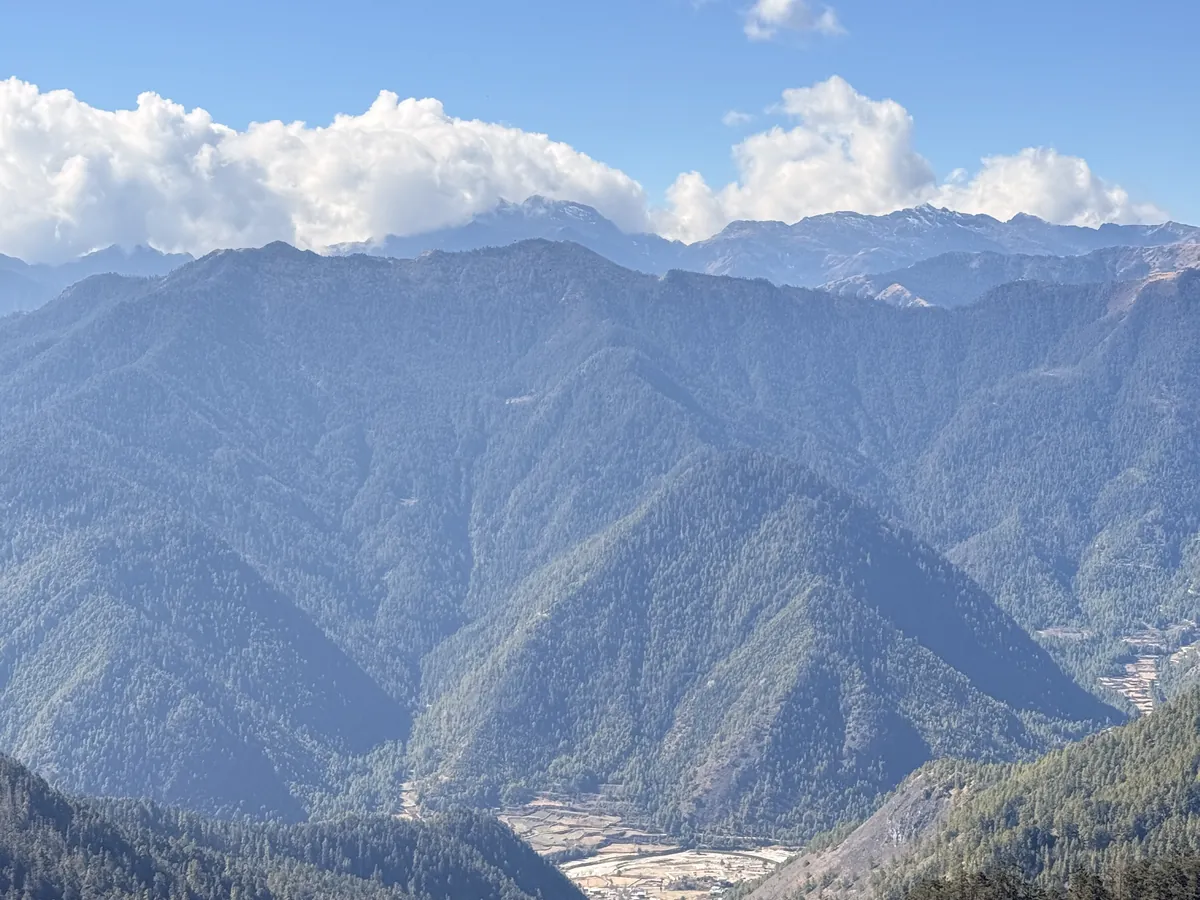
Punakha was the capital until 1955 and is still where the monk body winters, because at 1,200 m it stays warm when Thimphu is freezing. Coming down from Dochula the vegetation changes within half an hour — pine to banana and rice.
The dzong is the reason people come, and it deserves the reputation. It sits on the spit where the Pho Chhu and Mo Chhu meet, and in spring the jacarandas along its walls turn purple.
The second-oldest and, most people agree, the most beautiful dzong in Bhutan. Coronations and royal weddings happen here. Allow a proper hour — the inner courtyards and the assembly hall are the point, not the exterior photograph.
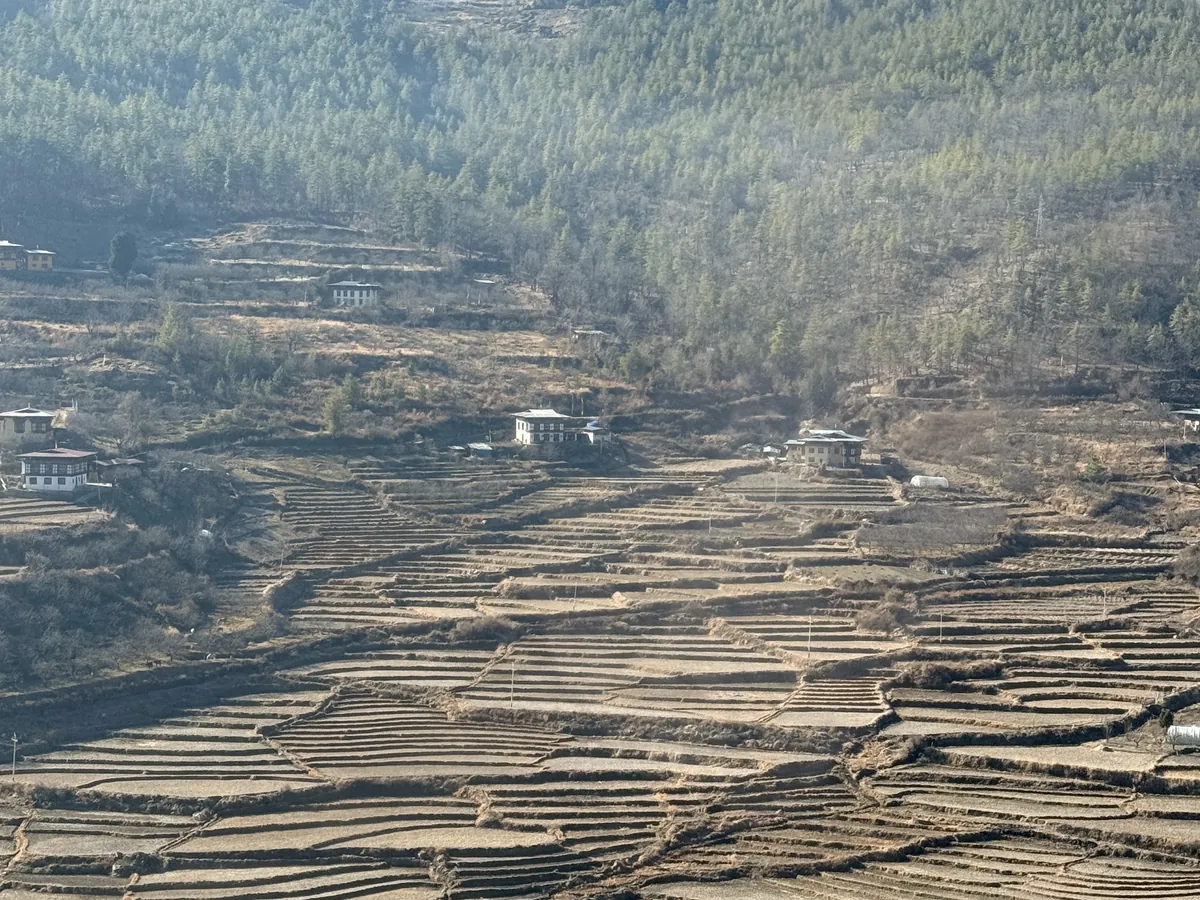
Twenty minutes on foot through rice terraces and a village, to the temple of the Divine Madman. The walk is flat, the fields are photogenic, and the local iconography surprises most first-time visitors.
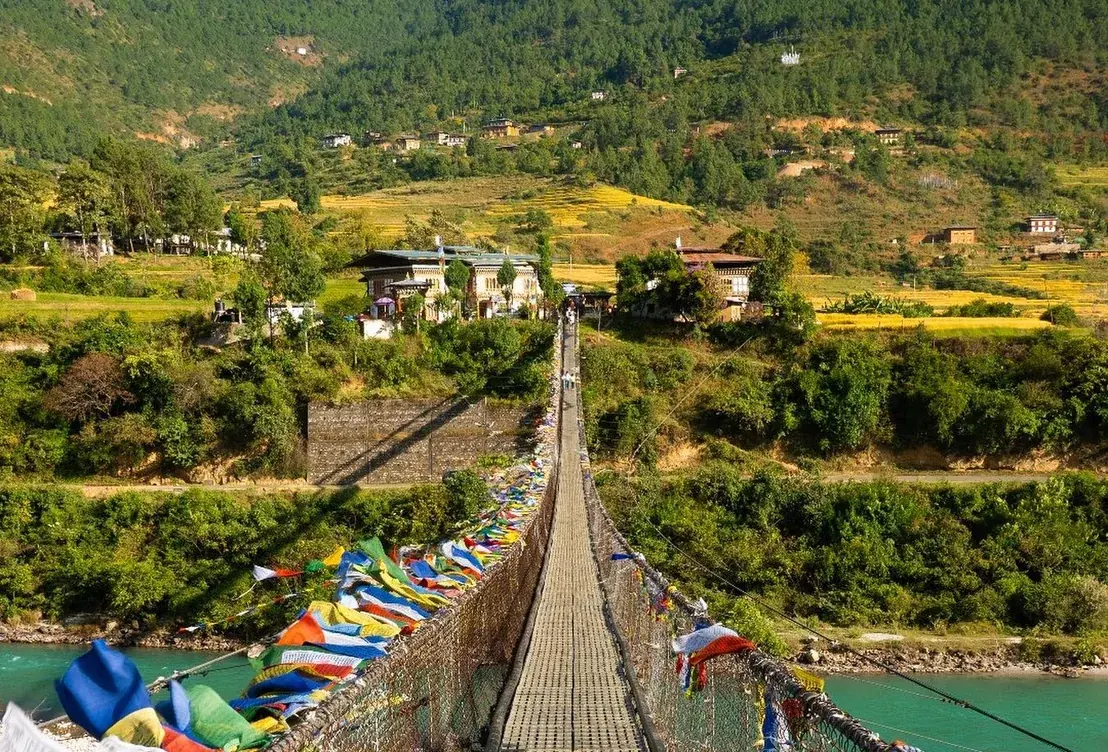
One of the longest in Bhutan, prayer flags the whole way across, and it moves. Two minutes from the dzong car park and worth the detour.
An hour’s uphill walk through paddy from the river. Four storeys of murals inside and a terrace looking straight up the valley. Skip it if your legs are saving themselves for Taktsang.
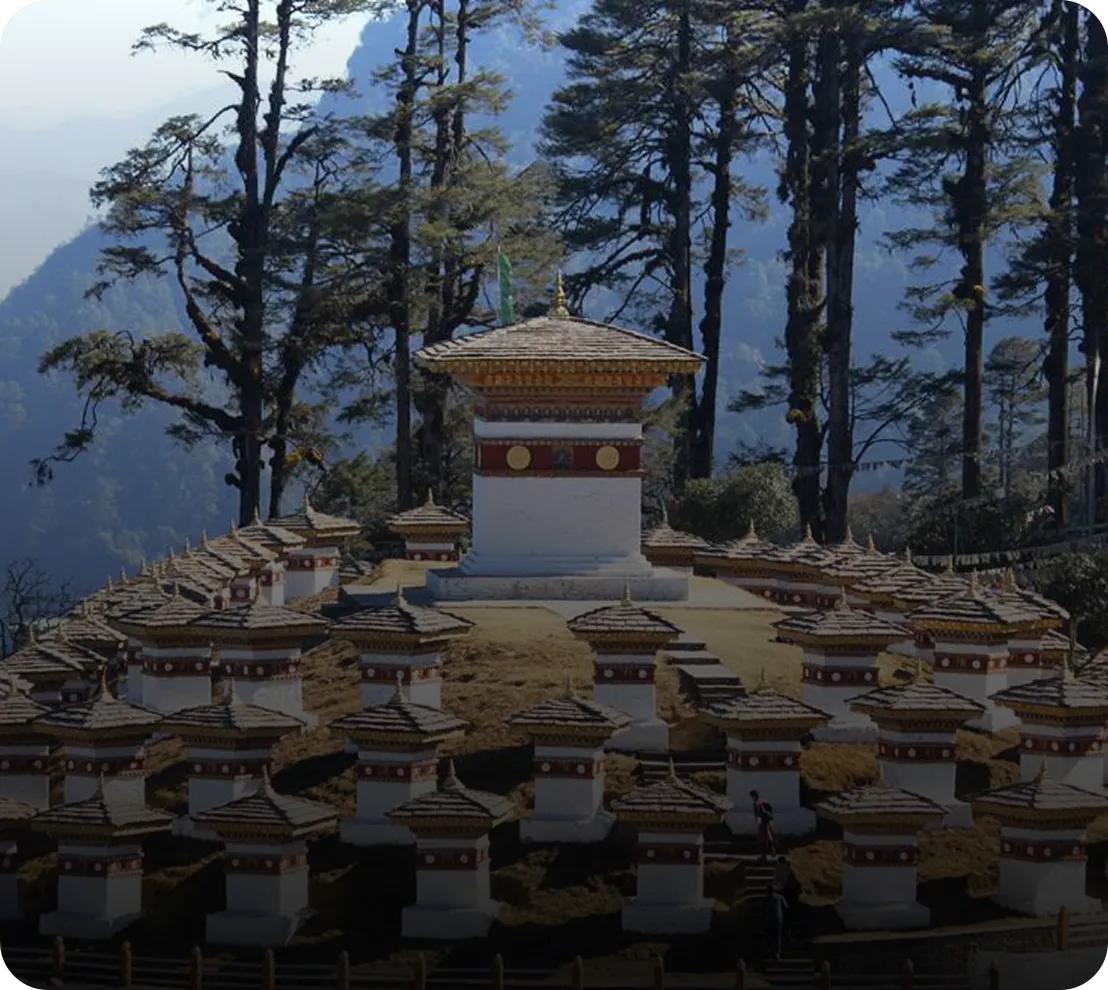
One road, and it goes over Dochula Pass at 3,100 m: 2 hr 30 min from Thimphu, of which 45 minutes gets you to the pass and the rest is the descent. The vegetation changes from pine to banana and rice within half an hour of the top. Phobjikha is a further 2 hr 30 min east if you are continuing into central Bhutan.
One night is enough to see the dzong properly and walk out to Chimi Lhakhang. Take two if you want Khamsum Yulley Namgyal Chorten as well — an hour uphill through paddy each way — or if you are rafting the Mo Chhu. Because it is warm, Punakha is also the sensible place to put your extra night in December and January.
The national SDF of ₹1,200 per adult per night (₹600 for ages 6–12) applies. Dzong entry is a few hundred ngultrum. Rafting the Mo Chhu is a local operator charge settled on the day, and it is one of the few genuinely optional extras on the western circuit. Bring cash — cards are unreliable outside the two or three larger hotels.
Dochula Pass is 45 minutes back towards Thimphu and is always paired with this leg. Phobjikha and Gangtey are 2 hr 30 min east. Wangdue Phodrang is 20 minutes down the valley, and is where the road forks for Trongsa, Bumthang and the rest of central Bhutan.
| Months | Weather | What it is good for | The catch |
|---|---|---|---|
| March–May | Warm, 15–30°C | Jacaranda in flower along the dzong walls | Gets hot by midday |
| June–August | Hot and wet | Green paddy, rivers running high | Humid, and leeches on the Khamsum walk |
| Sept–Nov | Pleasant, 12–28°C | Rice harvest and the Punakha Tshechu | Peak-season hotel pressure |
| Dec–Feb | Mild, 5–20°C | The warmest valley on the circuit in winter | Little — this is Punakha’s best season |
Tell us how many days you have. We will say honestly whether it belongs in your trip or whether the drive eats the day.
Talk to a Bhutan specialist →