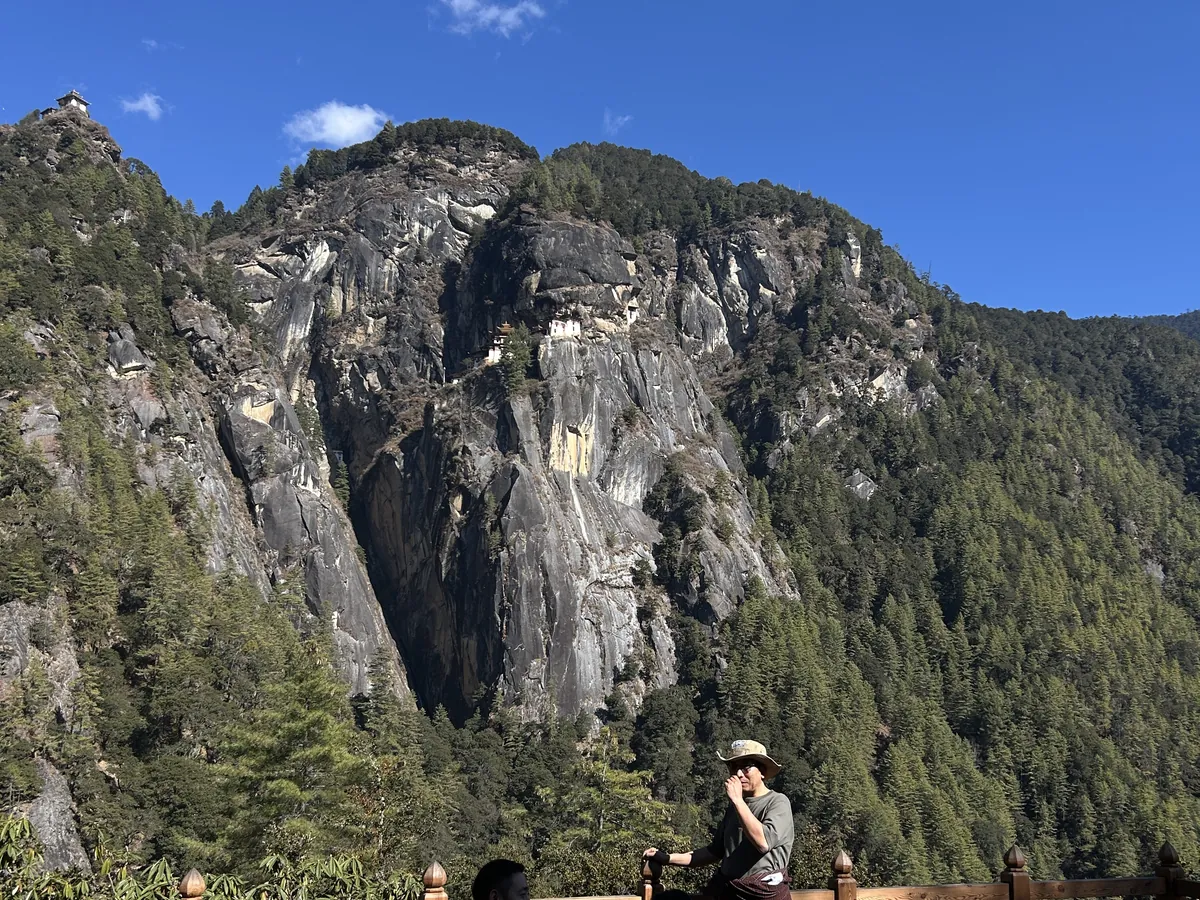
The 108 Druk Wangyal chortens
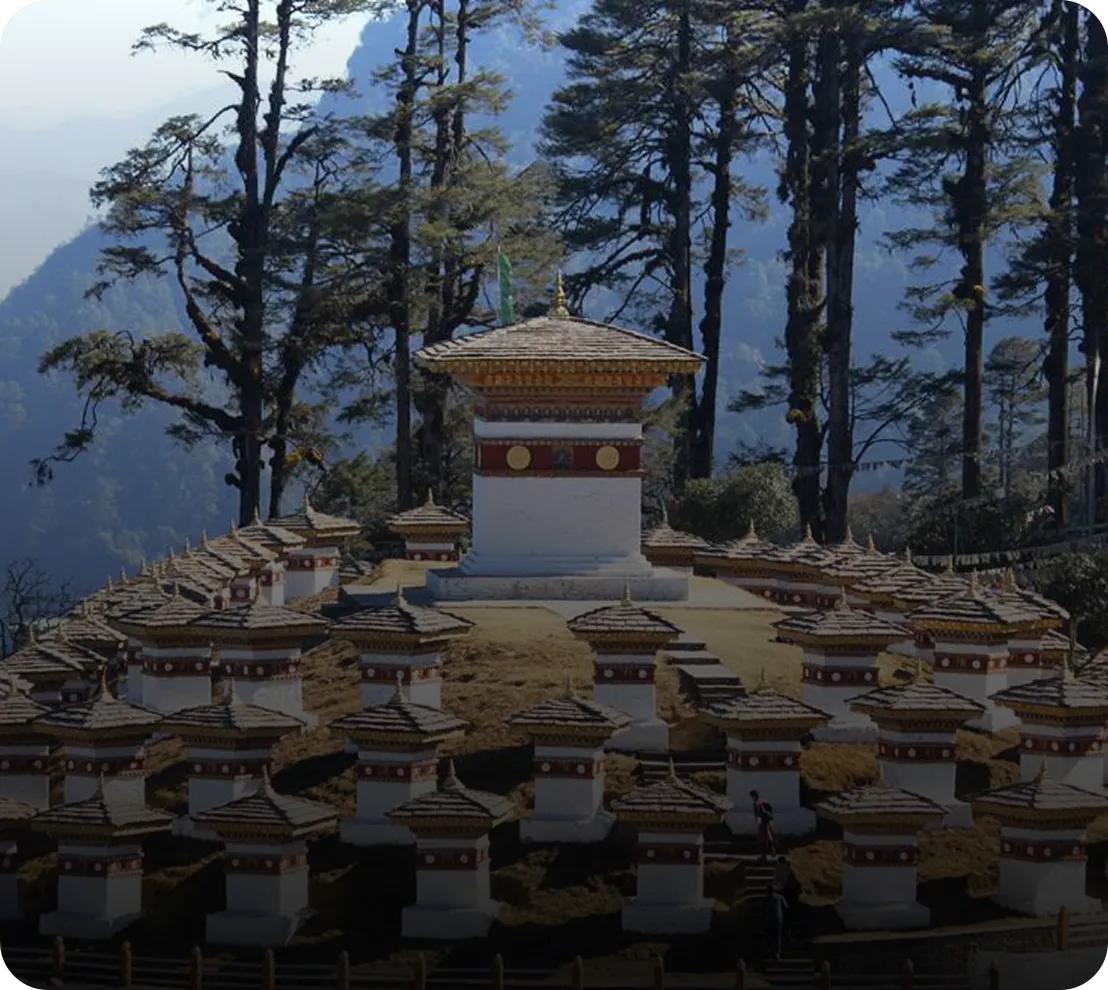
Built in three tiers on the knoll beside the road. Walk the circuit clockwise; it takes ten minutes and the mountains change as you go round.

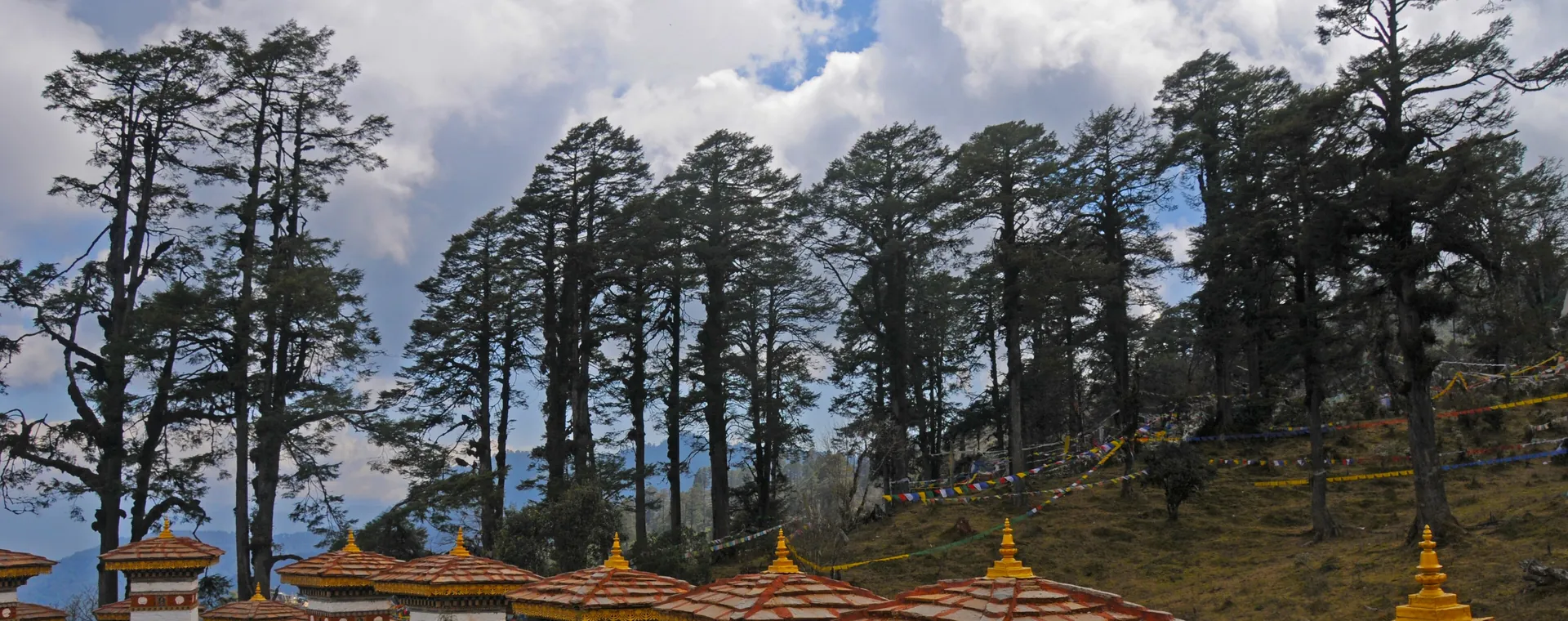
Dochula Pass sits at 3,100 m on the only road from Thimphu to Punakha, 45 minutes from Thimphu. It is a stop rather than a stay — 30 to 45 minutes for the 108 Druk Wangyal chortens and, between late October and February, the eastern Himalayan skyline. In summer it is usually cloud.
Dochula is a pass rather than a place to stay — you cross it on the way from Thimphu to Punakha, and everybody stops. The 108 chortens on the knoll were built in 2004 in memory of soldiers killed clearing militants out of the south.
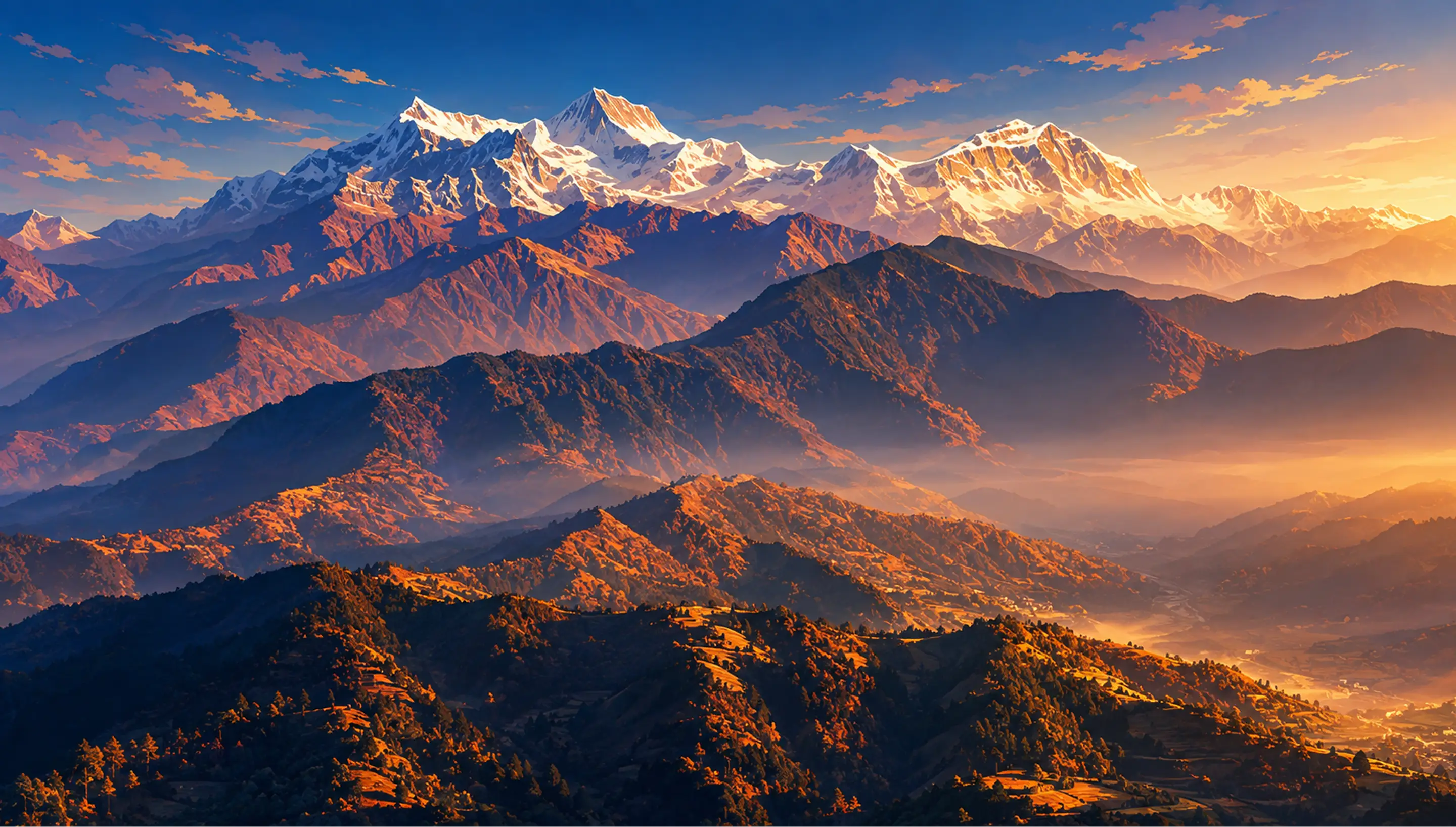
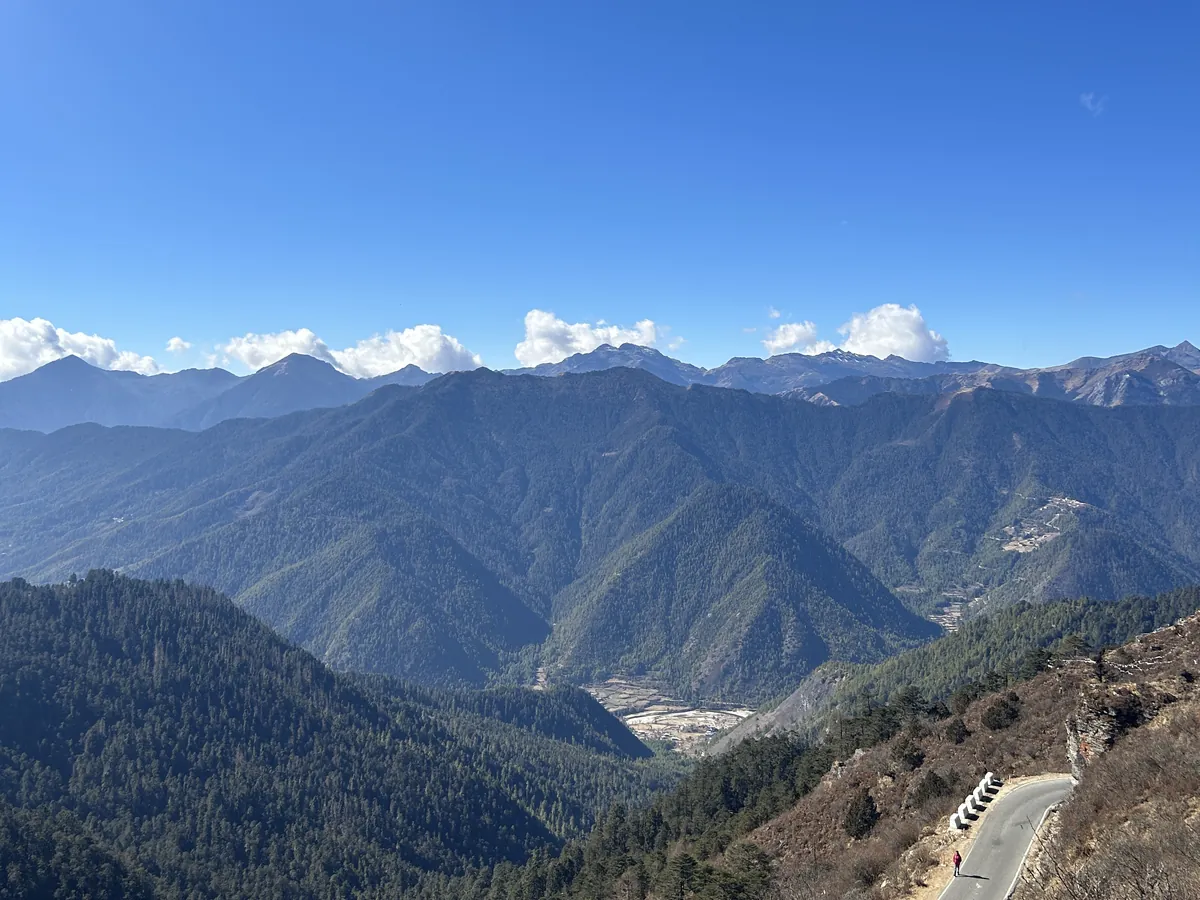
Whether it is worth the stop is entirely a question of cloud. On a clear morning between late October and February you get Masanggang, Tsendagang and Gangkhar Puensum — at 7,570 m the highest unclimbed mountain on earth — across the northern horizon. In summer you get a car park in fog.
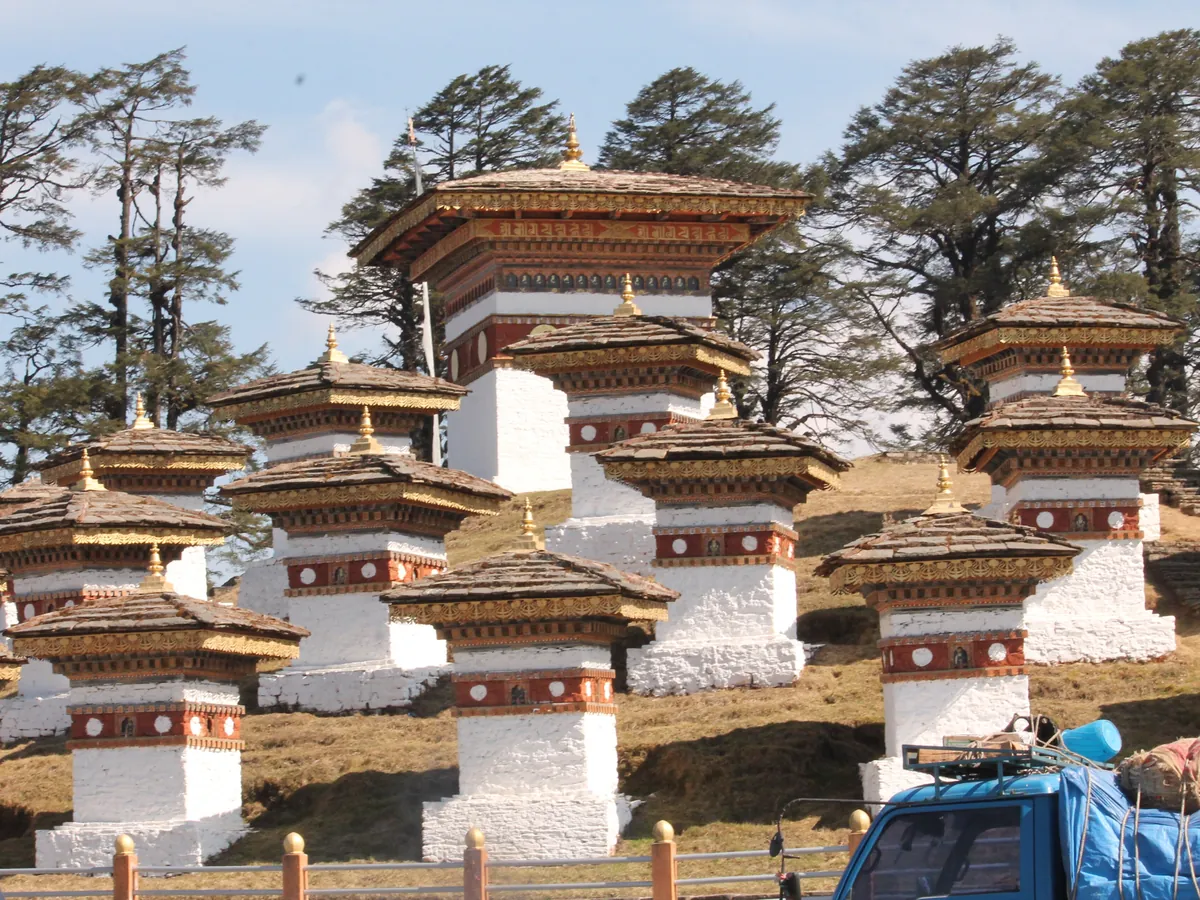
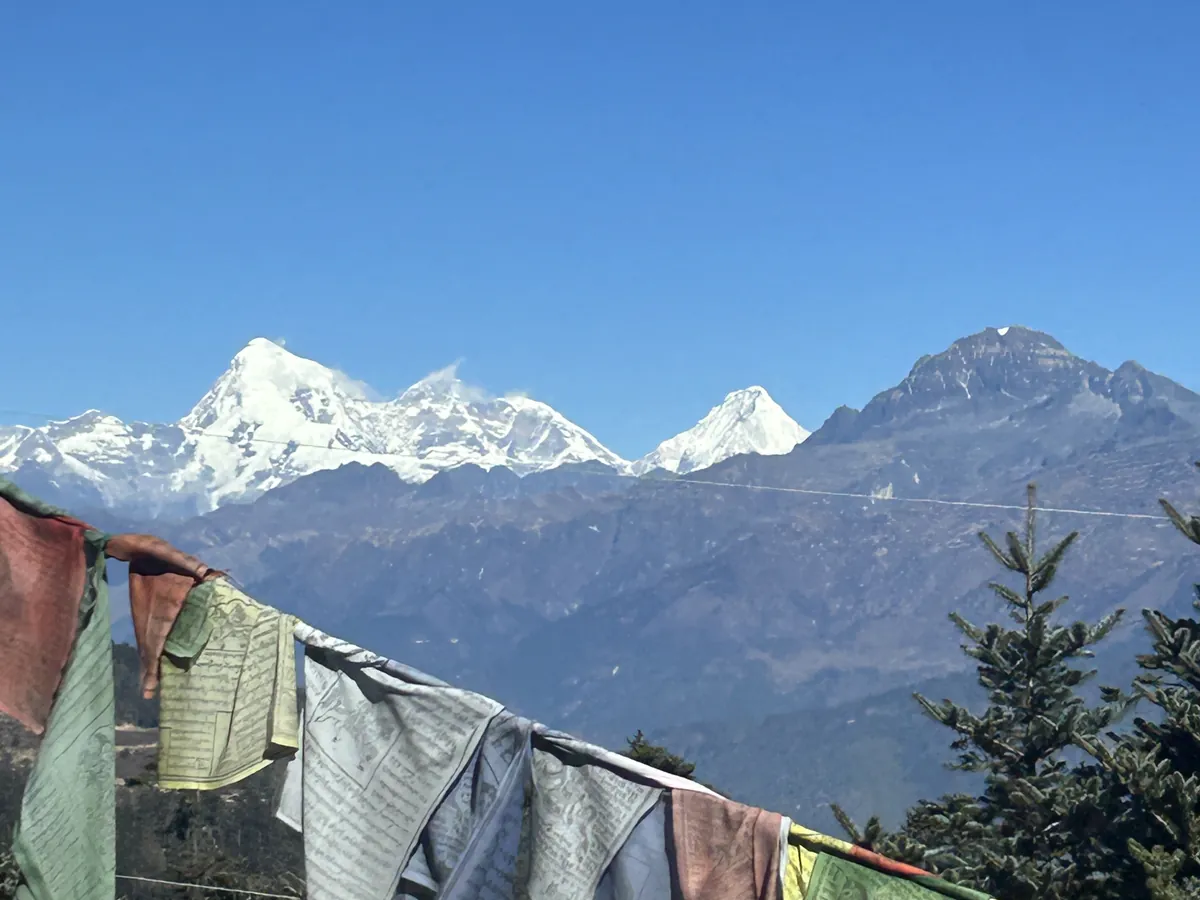
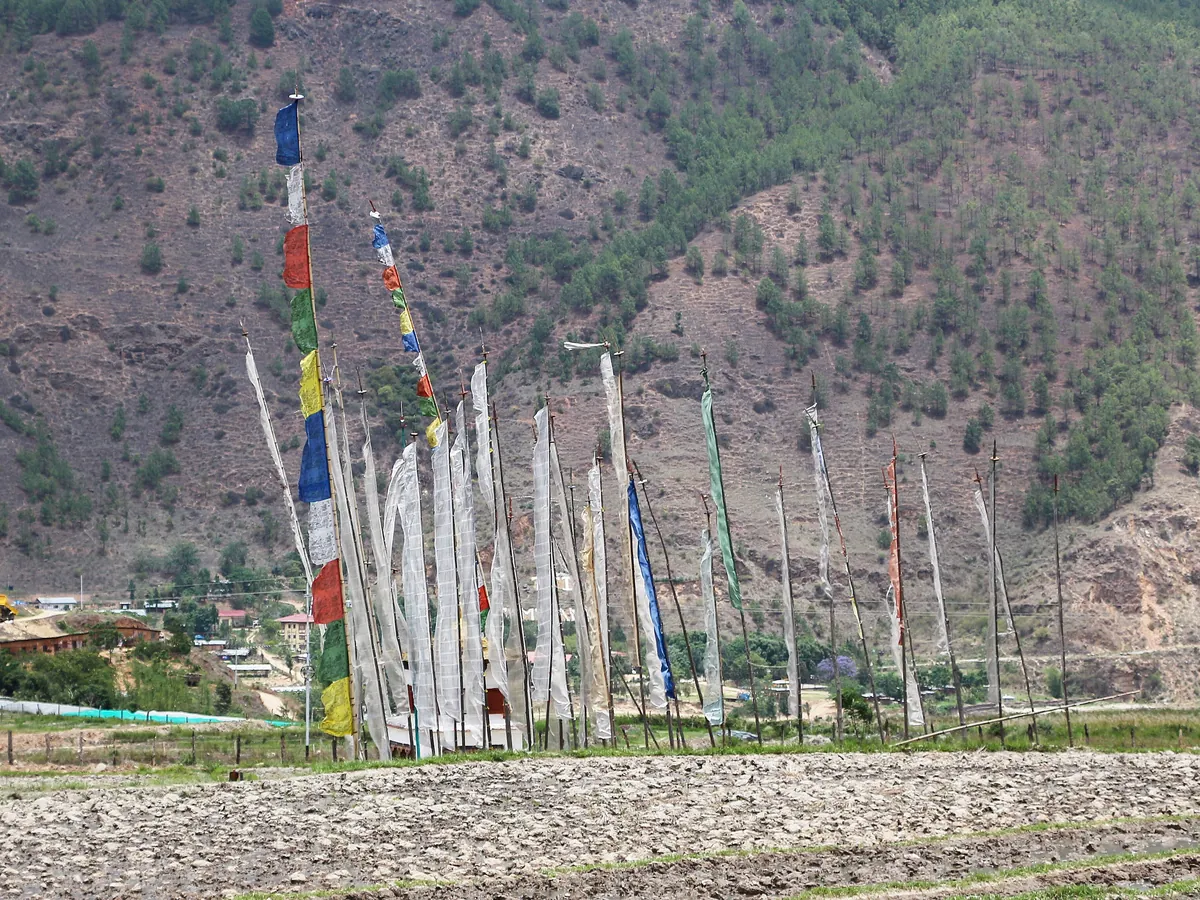
Built in three tiers on the knoll beside the road. Walk the circuit clockwise; it takes ten minutes and the mountains change as you go round.
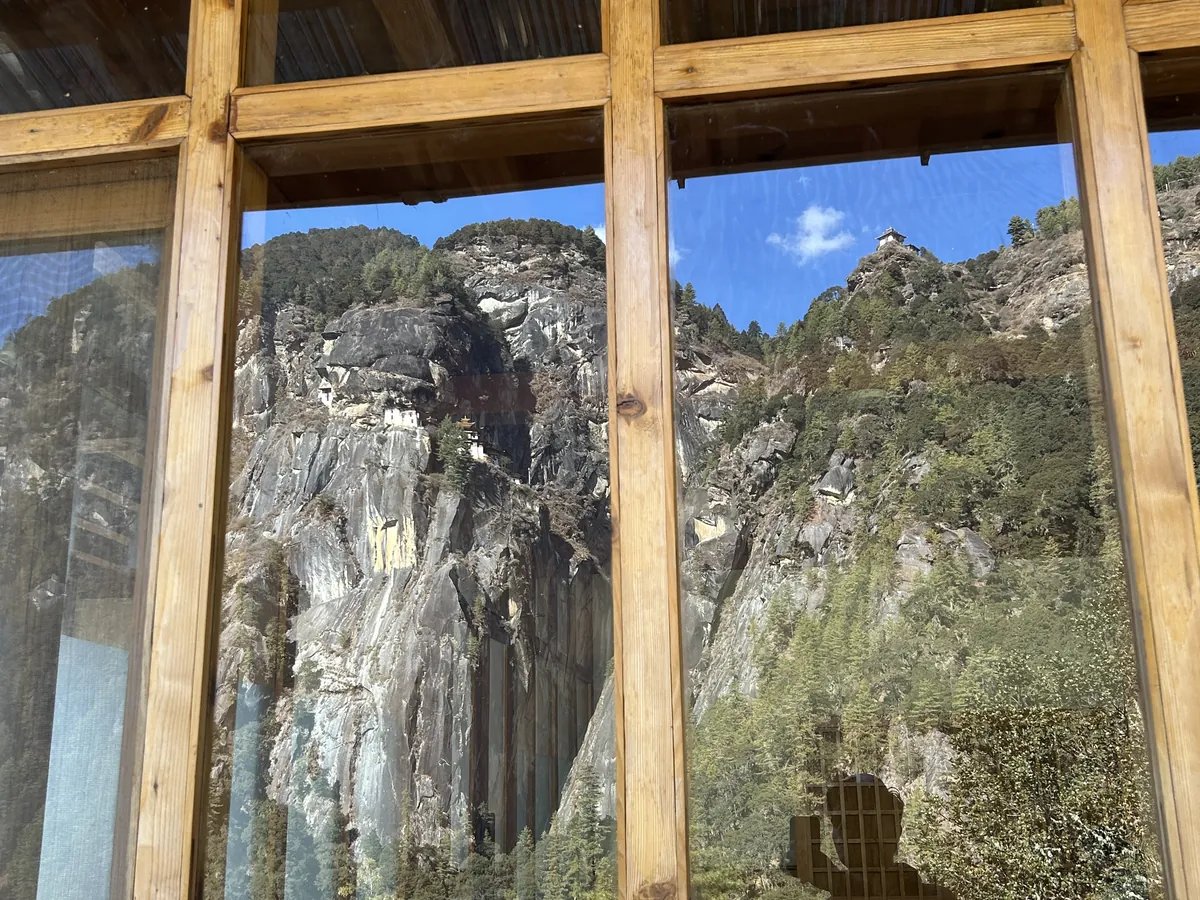
The temple above the chortens, and unusual for Bhutan — its murals include modern subjects, aircraft and the fourth King among them.
We time the drive to be here before 9am when your dates allow. Cloud builds through the day from spring onward, and by afternoon the range is usually gone.
Rhododendrons in April and May on the Thimphu side, and hot tea at the pass, which at 3,100 m in January is not optional.
You do not go to Dochula, you cross it. Every Thimphu–Punakha drive goes over the pass: 45 minutes up from Thimphu, then about 1 hr 45 min down the far side to Punakha. There is no way to reach Punakha or central Bhutan without it, which is why it appears on almost every itinerary we run.
Thirty to forty-five minutes. Ten of those are the clockwise circuit of the chortens, ten the Druk Wangyal Lhakhang above them, and the rest is tea, because at 3,100 m in January standing outside gets old quickly. There is nowhere to stay at the pass itself; the nearest beds are in Thimphu or Punakha.
Nothing beyond the SDF you are already paying (₹1,200 per adult per night, ₹600 for ages 6–12). There is no entry fee for the chortens or the lhakhang, and the cafeteria charges ordinary Bhutanese prices for tea and a plate of momos. It is the cheapest famous view in the country.
Thimphu is 45 minutes west, Punakha 1 hr 45 min east. The Royal Botanical Park on the Thimphu side of the pass carries dense rhododendron that flowers through April and May, and has marked trails if you want an hour on foot instead of a photo stop.
| Months | Weather | What it is good for | The catch |
|---|---|---|---|
| March–May | Cold at the pass | Rhododendron in the botanical park | Mountains usually behind haze |
| June–August | Wet and foggy | Little — this is the off window | The range is invisible most days |
| Sept–Nov | Cold, clearing | Views return from late October | Early morning only; cloud builds by 10am |
| Dec–Feb | Freezing, 0–9°C | The clearest Himalayan views of the year | Occasional snow closes the pass for a morning |
Tell us how many days you have. We will say honestly whether it belongs in your trip or whether the drive eats the day.
Talk to a Bhutan specialist →