
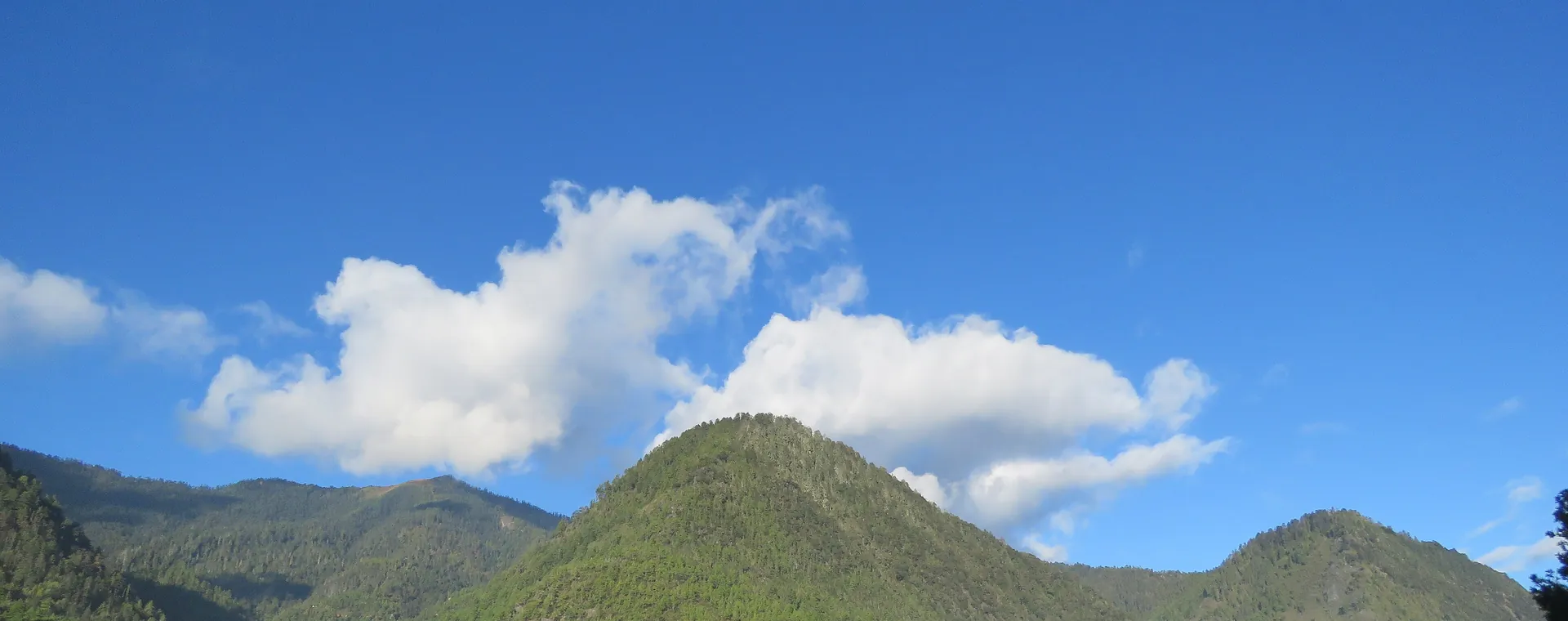
Haa Valley & Chele La
Over the highest road pass in the country into a valley that only opened to visitors in 2002.
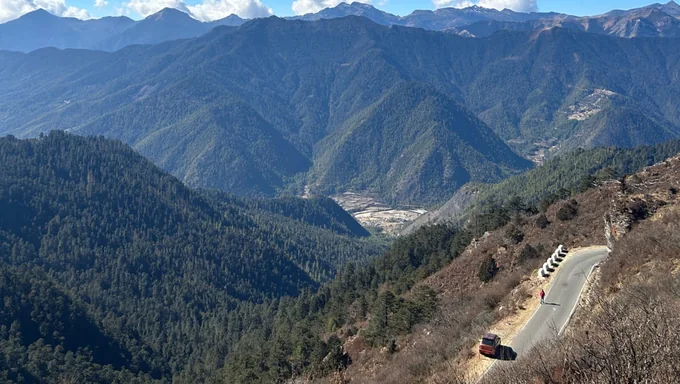
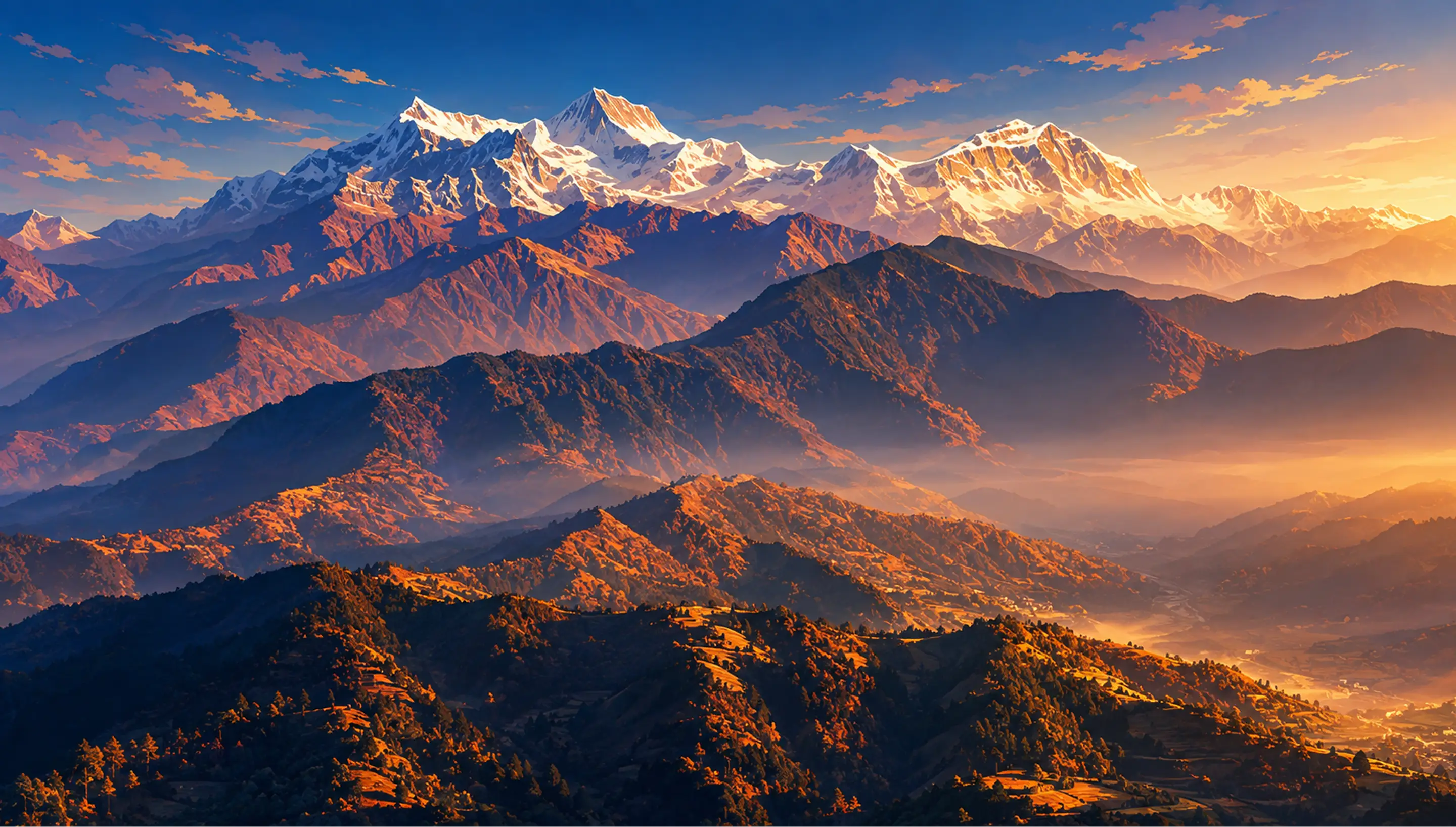
Haa sees a fraction of Paro’s traffic and looks like Bhutan did thirty years ago: buckwheat fields, a single road, and two temples that predate almost everything else in the country. Getting there means crossing Chele La at 3,988 m, where the prayer flags run for a kilometre along the ridge and Jomolhari stands on the skyline on a clear morning. This is the quiet route — best for couples, and for anyone who has already done the classic circuit.
- Duration
- 5N / 6D
- Valleys
- 4
- Grade
- Moderate — one high pass, gentle ridge walking
- Best season
- April to June, September to November
Day by day
- Met at Bagdogra Airport or New Jalpaiguri railway station and driven to the border town of Phuentsholing.
- Immigration formalities completed with your guide handling the paperwork.
- Evening free to wander the downtown bazaar where India ends and Bhutan begins.
- Overnight in Phuentsholing (300 m).
- En route: Zangtopelri Lhakhang, the Crocodile Breeding Centre and Kharbandi Goenpa above the plains.
- Climb through cloud forest into the Himalaya, arriving in the only capital city on earth without a single traffic light.
- Evening at the Handicrafts Emporium and Norzin Lam high street.
- Overnight in Thimphu (2,320 m).
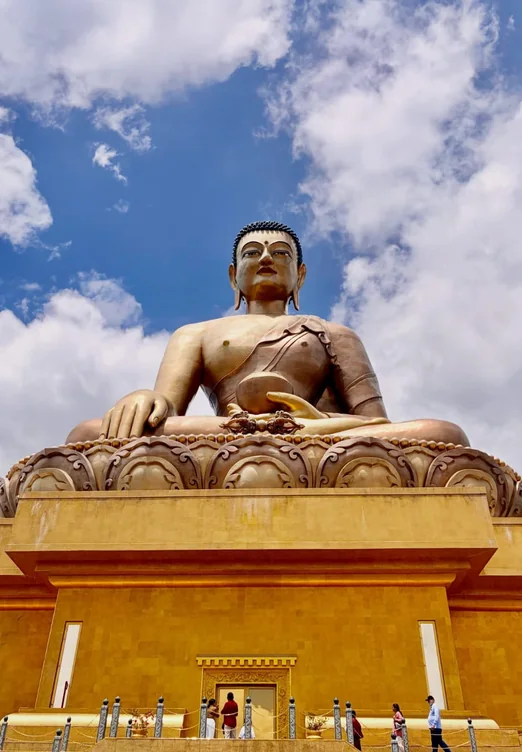
- Kuensel Phodrang — the 51 m Buddha Dordenma looking out over the whole valley.
- National Memorial Chorten, Changangkha Lhakhang and the National Library of Bhutan.
- Institute of Zorig Chusum, where students still learn the thirteen traditional arts by hand.
- Takin Preserve (Bhutan’s improbable national animal), the Folk Heritage Museum and the Craft Bazaar.
- Late afternoon at Tashichho Dzong as the flag comes down.
- Overnight in Thimphu.
- Drive to Paro, then climb the switchbacks to Chele La (3,988 m).
- Prayer-flag ridge walk on the pass; Jomolhari (7,326 m) on the horizon in clear weather.
- Descend on foot to Kila Goenpa nunnery below the pass.
- Continue down into Haa for Lhakhang Karpo and Lhakhang Nagpo, the white and black temples.
- Overnight in Haa (2,670 m).
- Slow morning among the buckwheat fields and the village houses.
- Return by the lower Haa road along the Wang Chhu.
- Afternoon at Rinpung Dzong and the Nyamai Zam bridge.
- Overnight in Paro.
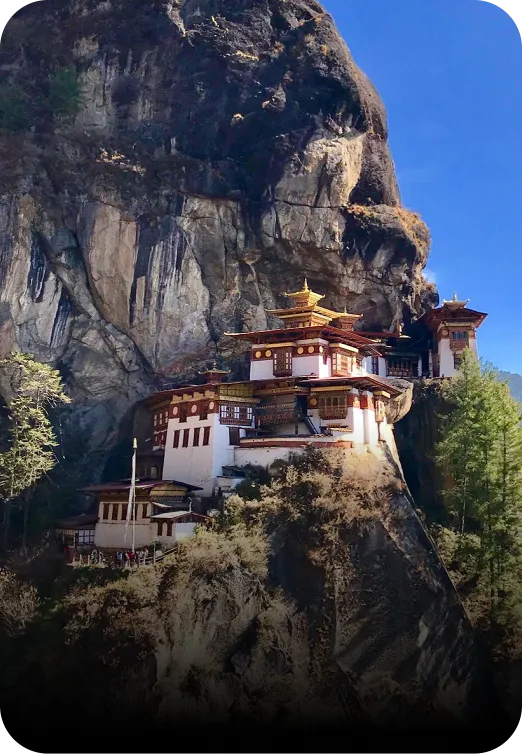
- Dawn climb to Paro Taktsang.
- Kyichu Lhakhang on the way down, then the airport.
What is included
Included
- Private vehicle and driver for the entire route
- Hotel accommodation on twin-sharing basis
- All sightseeing listed in the itinerary
- Airport and railway transfers
- Bhutan immigration permit processing
- Licensed English-speaking Bhutanese guide
- Daily breakfast
- All applicable taxes
Not included
- Entry fees at monasteries, dzongs and museums
- Lunch and dinner
- Sustainable Development Fee — ₹1,200 per adult per night, ₹600 per child
- Travel insurance
- Personal expenses, tips and anything not listed above
Questions travellers actually ask
How many days is the Haa Valley & Chele La tour?
The Haa Valley & Chele La runs 6 days and 5 nights, covering Phuentsholing, Thimphu, Paro, Haa. That is enough time to see Thimphu, Paro, Haa without spending the trip in the car. We can lengthen or shorten it before you book, at no charge.
Which places does the Haa Valley & Chele La cover?
The route runs Phuentsholing to Thimphu to Paro to Haa. Over the highest road pass in the country into a valley that only opened to visitors in 2002. Each stop gets at least one full day rather than a photo stop, and the driving between them is broken up with the sights that sit on the road anyway.
When is the best time to do this 6-day Bhutan trip?
April to June, September to November Bhutan's clearest skies come either side of the monsoon, and the valleys on this route sit high enough that winter mornings are cold but bright. Tell us your dates and we will say honestly whether they suit this itinerary.
How fit do I need to be for the Haa Valley & Chele La?
We grade this route as moderate — one high pass, gentle ridge walking. Nothing on it is technical, and the walking is optional almost everywhere. Where a climb is involved we will say so up front, and your guide can adjust any day on the ground.
Do Indian nationals need a visa for Bhutan?
No visa is required. Indian, Bangladeshi and Maldivian nationals travel on a permit issued at Phuentsholing or Paro, and we handle the paperwork for you. Bring a valid passport or a Voter ID card, plus passport photographs.
What is the Sustainable Development Fee?
The SDF is a nightly levy the Bhutanese government charges every visitor; it funds free healthcare, education and forest conservation. For Indian nationals it is currently ₹1,200 per adult per night and ₹600 per child. It is billed separately from the tour cost.
When is the best time to visit Bhutan?
Spring (March to May) for rhododendron and clear valleys, and autumn (September to November) for the sharpest mountain views and the biggest tsechu festivals. Winter is cold but very clear, and it is the only season for the black-necked cranes in Phobjikha. Monsoon runs June to August.
How hard is the walk to the Tiger’s Nest?
It is a 900 m ascent over roughly 4 km each way, on a well-made path with a cafeteria at the halfway point. Most reasonably fit people manage it in four to five hours return. Ponies are available for the first half of the climb.
Can the itinerary be changed?
Yes. Every route on this site is a starting point. Tell us how long you have, what you care about, and who is travelling, and we will rebuild it around that.
Valleys on this route
Want this route changed?
Add a valley, drop a drive, travel in winter. Every itinerary here is rebuilt for free before you book.
Talk to a Bhutan specialist →