On foot
The Tiger’s Nest climb, honestly described
Taktsang is a 900 m ascent over 4 km each way, four to five hours return. What the path is like, where the hard part is, and when to start.

Almost every road trip into Bhutan starts at Phuentsholing, across the gate from Jaigaon in West Bengal. Indian nationals walk through the gate freely, but to travel beyond Phuentsholing you need an entry permit from the Immigration Office there — open Monday to Friday, roughly 9am to 5pm with a lunch break, and closed on weekends and Bhutanese public holidays. Budget two to three hours and arrive in the morning.
Phuentsholing has no airport and no railway station. Everyone arrives the same two ways: Bagdogra airport, about four and a half hours by road, or New Jalpaiguri (NJP) railway station at Siliguri, about four hours. Hasimara is the nearest station of any size at roughly an hour away, but very few useful trains stop there, so most of our guests come through NJP or Bagdogra and we meet them at the exit.
The drive itself is flat the whole way — tea gardens, the Torsa river, a lot of truck traffic near Birpara. It is not a mountain road and nobody gets sick on it. The mountains start after the border, not before.
The single most useful thing you can do is sleep in Jaigaon or Phuentsholing and present yourself at the permit counter when it opens. People who try to fly into Bagdogra in the morning and clear immigration the same afternoon routinely miss the counter, lose a day, and spend it in a border town that is not what they came for.
The Immigration Office sits a few minutes inside the Bhutan gate. Indian, Bangladeshi and Maldivian nationals are processed there; everyone else must already hold a visa clearance arranged in advance.
Everyone named on the permit has to be physically present for the photograph and the thumbprint. You cannot send one person with a pile of documents, which is the single most common thing that derails a family group.
The entry permit covers Thimphu and Paro. Punakha, Phobjikha, Haa, Bumthang and anywhere east need a route permit, issued at the Immigration Office in Thimphu, usually the morning after you arrive. It takes an hour or so and your guide handles it while you have breakfast. Plan the itinerary so that your first full day is a Thimphu day — if it falls on a weekend, that office is shut too, and the trip loses a day it did not need to.
| Time | What happens |
|---|---|
| 08:00 | Breakfast in Jaigaon or Phuentsholing; documents and photocopies out |
| 09:00 | Immigration Office opens; forms, photograph, thumbprint |
| 10:30–12:00 | Permit issued for the group |
| 12:30 | Leave Phuentsholing — the climb to Thimphu starts immediately |
| 17:00 | Thimphu, roughly 170 km and five to six hours later |
The road from Phuentsholing to Thimphu gains about 2,000 metres in those five hours. It is a good road but it is continuous hairpins from Gedu onward. If anyone in the group gets carsick, that is the stretch to be ready for, not anything later.
Phuentsholing is the last place where everything Indian still works normally, so people treat it as a supply stop.
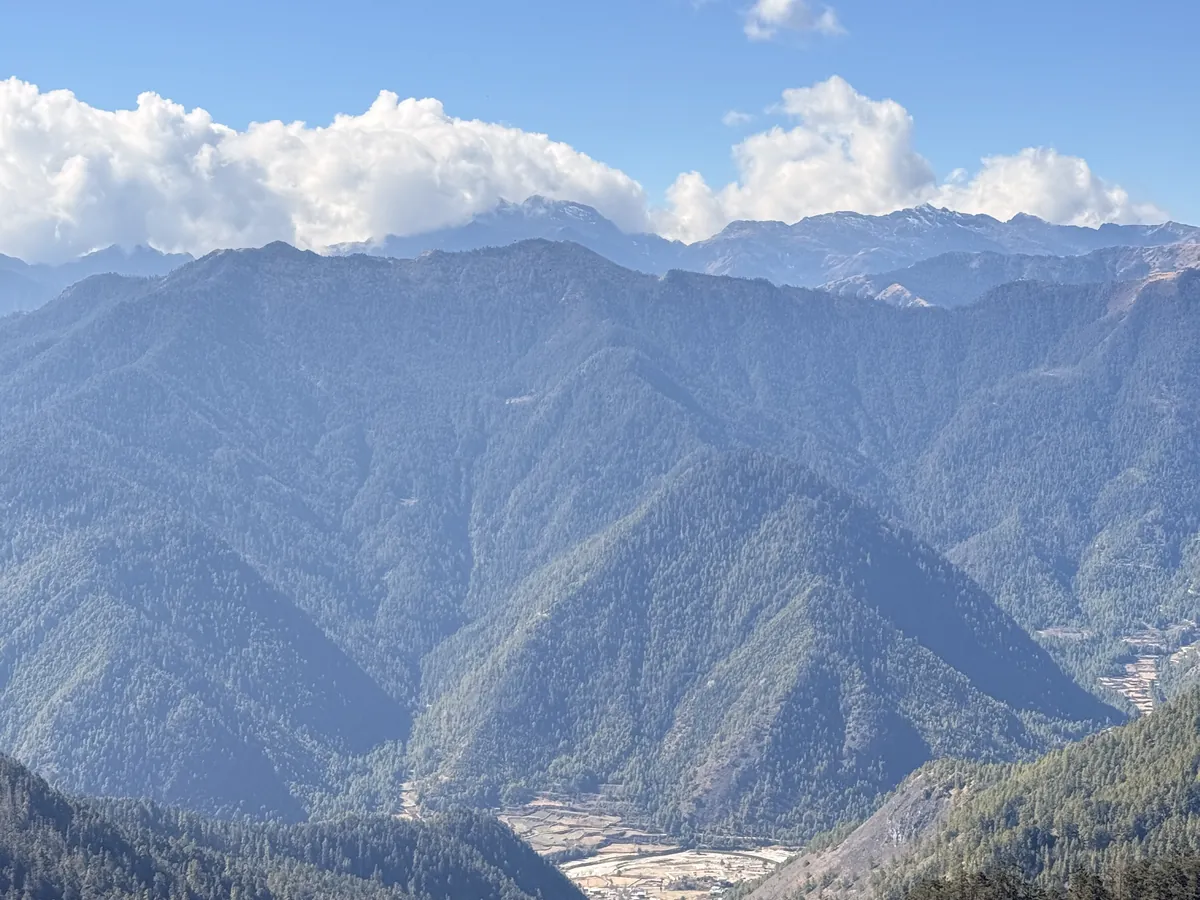
Then the gate closes behind you and the character of the trip changes within twenty minutes of driving. That first climb out of Phuentsholing, with the plains still visible behind and cloud forest starting on either side, is the moment most of our guests say the holiday actually began.
Written by the Evergreen Travels team · published
Yes. A Voter ID card is accepted in place of a passport for Indian nationals at the Phuentsholing Immigration Office. Aadhaar cards and driving licences are not accepted. Children under 18 may travel on a birth certificate or school identity card, accompanied by a parent.
Two to three hours on a normal weekday morning, longer in the peak weeks of October and during festivals. The office works Monday to Friday, roughly 9am to 5pm with a lunch break, and is closed on weekends and Bhutanese public holidays.
About 160 km, four to four and a half hours by road. New Jalpaiguri railway station at Siliguri is a similar distance. Both are flat, easy drives through tea country.
Yes. The entry permit issued at Phuentsholing covers Thimphu and Paro only. Punakha, Phobjikha, Haa and Bumthang need a route permit, obtained the next morning at the Immigration Office in Thimphu. It takes about an hour and your guide arranges it.
You can walk into Phuentsholing town, but you cannot get the permit that lets you travel beyond it, because the Immigration Office is shut. Plan to cross on a weekday morning.
Taktsang is a 900 m ascent over 4 km each way, four to five hours return. What the path is like, where the hard part is, and when to start.
Paro, Thimphu, Punakha, Jakar and Wangdue tshechus compared: when each falls, how big it is, how hard the hotels are to get and which one suits a first visit.
Bhutan as a multi-generation trip: the drives, the altitude, what children actually enjoy, and where to slow down for older travellers.
Indian, Bangladeshi and Maldivian nationals need a permit, not a visa. What documents to carry, where it is issued, what the SDF costs and how long it takes.
October and November give the clearest mountain views, March to May the rhododendron and the big tshechus. Month-by-month weather, festivals and trade-offs.
Ngultrum is pegged 1:1 to the rupee and INR is accepted widely. Where cards work, which notes get refused, where the ATMs are and how much cash to carry.
Tell us the dates and who is coming. We will send back a route that fits, not a brochure.
Talk to a Bhutan specialist →