Entry
Bhutan Permits, Visas and the SDF
Indian, Bangladeshi and Maldivian nationals need a permit, not a visa. What documents to carry, where it is issued, what the SDF costs and how long it takes.

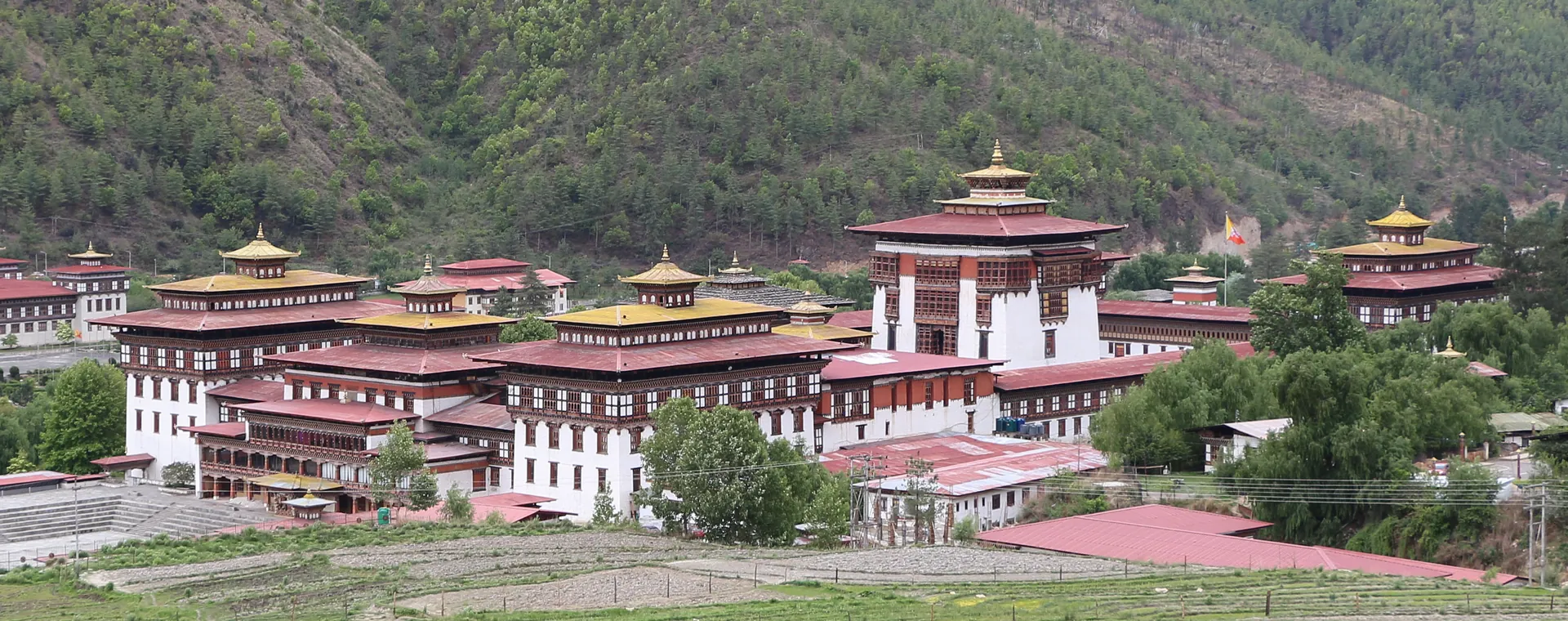
Bhutan is relaxed about most things and firm about a few. Long trousers and covered shoulders are required in every dzong and lhakhang, hats and shoes come off at the door, there is no photography inside temple buildings, and you walk clockwise around chortens, mani walls and prayer wheels. Smoking in public is illegal.
Dzongs are working government and monastic buildings, not tourist sites, and the dress code is enforced at the door rather than suggested.
Bhutanese visitors wear the gho and kira with a kabney or rachu when entering a dzong, and you will notice guides and drivers changing before they go in. Visitors are not expected to do this, but it tells you how seriously the building is taken.
Courtyards, exteriors, prayer flags, chortens, festival dancing at a tshechu. Ask before photographing monks close up, the same as you would anyone else.
Photography is not permitted inside temple buildings anywhere in Bhutan. The murals and statues are consecrated objects, not exhibits, and the rule is absolute regardless of flash.
Drones need advance permission and are restricted around dzongs, airports and the border. Assume no unless it has been cleared for you in writing.
The one piece of practical Buddhism worth learning before you arrive: always clockwise. Chortens, mani walls, prayer wheels, temples and the inner circuit of a dzong are all circumambulated with the object on your right.
Smoking in public places is illegal in Bhutan and tobacco is not sold in the country. Small quantities may be brought in for personal use with duty paid at the border, and it must stay out of public spaces. Enforcement is real, not nominal.
Legal and widely available, but bars and liquor shops close on Tuesdays — “dry day” — across the country. Hotel guests are usually unaffected.
Antiques and religious artefacts cannot be exported. If you buy anything that looks old, get a receipt and, where relevant, a clearance certificate from the seller. Contemporary handicrafts and textiles are fine.
Festivals are the one place where visitors and the religious calendar collide most directly, and the rules are the same, only with more people watching. Dress as you would for a dzong. Sit at the edges rather than in the front rows kept for elders and local families. Do not walk across the dance ground between masked dances, and do not use flash. Stand when the monks process.
None of this is onerous, and Bhutanese people are forgiving of visitors who get it wrong sincerely. The rules that will not bend are the dress code at the door and the camera inside.
Long trousers or a long skirt and a top that covers the shoulders. Shorts, cropped trousers and sleeveless tops will be turned away at the door. Hats and sunglasses come off in the courtyard, and shoes come off before entering a temple building.
No. Photography is not permitted inside any temple building in Bhutan, with or without flash, because the murals and statues are consecrated objects rather than exhibits. Outside — courtyards, exteriors, festival dancing — is almost always fine.
It is the Buddhist convention for circumambulating sacred objects: you keep the chorten, mani wall or temple on your right as you walk. Prayer wheels are turned clockwise with the right hand for the same reason.
Smoking in public places is illegal and tobacco is not sold in the country. Small quantities for personal use may be brought in with duty paid at the border, but it must be kept out of public spaces. Enforcement is genuine.
Indian, Bangladeshi and Maldivian nationals need a permit, not a visa. What documents to carry, where it is issued, what the SDF costs and how long it takes.
October and November give the clearest mountain views, March to May the rhododendron and the big tshechus. Month-by-month weather, festivals and trade-offs.
Ngultrum is pegged 1:1 to the rupee and INR is accepted widely. Where cards work, which notes get refused, where the ATMs are and how much cash to carry.
Thimphu 2,320 m, Phobjikha 3,000 m, Chele La 3,988 m — nothing technical, but the numbers are real. What the Tiger’s Nest climb involves, and how to prepare.
A packing list built around real conditions: 1,200 m to 3,988 m in one day, temple dress codes, the Taktsang climb, and a country that runs on small notes.
Ask us anything about Bhutan, even if you never book. We would rather you arrived well prepared.
Talk to a Bhutan specialist →